
Home Blog Page 3

Passive Retrofit Strategies as an Intervention in Building Efficiency in Winter Season

VW Applied Sciences, Volume: 4, Issue: 2, 130-145

Received: June 10, 2022
Accepted: July 02, 2022
Published online: July 07, 2022

Navneet Sharma 1*, Tabish Alam 2

1Institute of Environmental Studies, Kurukshetra University, Kurukshetra 136119, India

2Building Energy Efficiency, CSIR-Central Building Research Institute, Roorkee 247667, India

Abstract:  In this work, a small office building located in Roorkee (29° 52ʹ 29.48ʺ N, latitude & 77° 53ʹ 23.73ʺ E, longitude), India, has been simulated to calculate the heating load in the winter season. The office building has a net floor area of 13.14 m2, an air-conditioned volume of 39.4,2 m3, and a total window area of 12.79 m2, the proportion of windows to walls is forty-five percent on SW and SE facades, leading to high heating demands in the winter period. The computer simulation for the reduction of the building heating demand has been carried out in Design Builder software. Five different passive strategies have been implemented to reduce the building heating demand. These passive cooling techniques include retrofit techniques such as glazing, roof, wall thermal insulation, reflective coating, and windows frame. It has been found that the building’s annual heating demand of 450 kWh in the base case (without retrofit) has been reduced by 75%-85% with the application of improved glazing, roof, wall thermal insulation, reflective coatings, and improved window frames. The net savings in this analysis refer to the energy savings. The savings are calculated over a 5-month period, from November to March. Total electric units of 352 can be saved over the course of five months. Also, CO2 emissions during the winter period can reduce by 718 kg by implementing these strategies per winter season.

Keywords:  Retrofit Strategies, Building Envelope, Glazing, Insulation, Passive

Improving Inverter Performance for Stand-Alone and Integrated Photovoltaic System

VW Engineering International, Volume: 4, Issue:3, 66-71

Received: June 05, 2022
Accepted: July 03, 2022
Published online: July 07, 2022

Md Ehtesham 1, * and Mohmmad Ahmad 2

1Electrical and Electronics Department, Maulana Azad National Urdu University, Cuttack Campus, 753008, Odisha, India

2Department of Electrical Engineering, Rajkiya Engineering College, Bijnor, 246725, Uttar Pradesh, India

Abstract: As more and more renewable energy resources are penetrating the distribution networks, there have been growing concerns regarding its adverse impacts on the integrated power system. Consequently, numerous research works are being focused on methods of mitigating issues such as reliability, low power quality, stability, etc.  Here in this paper performance of multilevel inverter for the solar photovoltaic (PV) based standalone and grid-connected system has been enhanced. The inverter circuit has been tested for parameters like THD (Total Harmonics Distortion) and system efficiency for standalone systems having RL load being operated at different power factors. Then the same analysis has been done for a grid-connected system with RL load connected in parallel at PCC (Point of Common Coupling). It is found that THD slightly decreases if the increment is being done in the power factor of the load. These distortions have been then reduced below 5% by connecting passive filters at PCC. Simulation results of THD, power output, and efficiency have been tabulated with variation in the operating power factor of the load. Further, power transfer to the utility grid from the PV inverter is examined along with THD and circuit efficiency. Finally, the simulated results have been plotted and compared with analytical results for validation of the proposed scheme.

Keywords: photovoltaic, power quality, inverter, power factor, filters

Exergy Based Performance Improvement of Cogeneration Plant of Sugar Mills

VW Engineering International, Volume: 4, Issue: 2, 59-65

Received: June 07, 2022
Accepted: June 22, 2022
Published online: June 23, 2022

Yusuf Parvez1,*, Ravinder Kumar2

1Mechanical Engineering, Maulana Azad National Urdu University, Cuttack, Odisha, India.
2Mechanical and Automation Engineering, Indira Gandhi Delhi Technical University for Women, New Delhi, India.

Abstract:  Cogeneration, the combined generation of heat and power, is an efficient method to reduce cost or to save energy and hence, reduce pollution. A large number of thermal process industries have this option to install cogeneration systems and sugar mill is one of them. In this work, energy, and exergy analysis of a sugar mill running on cogeneration system, having a back pressure turbine system, has been carried out. Based on the operational data received from the industry, a detailed analysis of the system has been performed. It was found that the output power and excess power of the plant increase with the increase in the boiler pressure and therefore, increase the cogeneration efficiency. Also, it was noticed that when the back pressure increases, the turbine output and cogeneration efficiency decrease, Heat to Power Ratio (HPR) spans over a range of 2.79 to 4.07. From the exergy analysis of the plant, it is observed that the boiler is the main component for exergy destruction. The energy analysis of the bagasse-fired boiler was carried out and the results showed that energy efficiency was high up to 84.5%. However, the second law efficiency gave 28.5% and the irreversibility rate associated with the combustion chamber was 62.19 MW which accounts for 55.09% of the total fuel exergy.

Keywords: Sugar industry, Cogeneration, Back pressure turbine, Energy analysis, Exergy analysis,

Fabrication of Composites Based on ZA-27 Alloy Reinforced with Carbon Fiber and Graphite Particles in varying percentage

VW Engineering International, Volume: 4, Issue: 2, 50-58

Received: May 09, 2022
Accepted: June 15, 2022
Published online: June 15, 2022

Arsum Javaid *, Anuj Kumar, Dheeraj Sagar, Himanshu Singh

Department of Mechanical Engineering, Invertis University, Bareilly 243123, India

Abstract: The purpose of this study is to see how carbon fiber and graphite reinforcement affect the strength, wear, hardness, etc. of the ZA-27 alloy. The stir casting process was used to create composites containing carbon fiber and graphite particles. Using a block-on-disk tribometer, the tribological characteristics of unreinforced alloys and composites were investigated at various specific loads and sliding speeds. In all combinations of applied loads (Fn) and sliding speeds (v) in testing, the ZA-27/ graphite composite specimens displayed much lower wear performance than the matrix aluminum specimens. Nonuniform triboinduced graphite films were generated in test circumstances defined by a low graphite content and low sliding speeds and applied loads, resulting in a rise in the friction coefficient and wear rate as the sliding speed and applied load increased. It was found that reinforced samples performed better tribologically. Carbon fiber and graphite-reinforced ZA-27 may find new applications in various machine parts in the industry.

Keywords: ZA-27 alloy, Carbon Fiber, Graphite particles, Fabrication, Tribological Behavior

Tribological Investigation of Composite-based ZA-27 Alloy Reinforced by Carbon Fibre in Different Proportions

VW Engineering International, Volume: 4, Issue: 1, 41-49

Received: May 10, 2022
Accepted: June 06, 2022
Published online: June 07, 2022

Himanshu Singh 1*, Anuj Kumar2, Arsum Javaid3

1 Mechanical Engineering, Invertis University, Bareilly 243123, India
2 Mechanical Engineering, Invertis University, Bareilly 243123, India
3 Mechanical Engineering, Invertis University, Bareilly 243123, India


Abstract:  The study’s goal is to see how mechanical, wear, and thermal characteristics of ZA-27 alloy composites are all affected by macroscopic carbon fiber particles. The composites were made using the compo casting process, with carbon fiber particles used to strengthen the ZA-27 alloy. Under unlubricated circumstances, the pin on the disc equipment was subjected to wear testing at varied loads and speeds. With the addition of Carbon Fibre particles, it was discovered that the tribological quality improves. However, based on the results of the other parameters, in order to obtain better performance, the percentage of reinforcing must be tuned depending on the application requirements, and composites may be utilized as structural materials in a number of applications, including bearings and temperature control functions.

Keywords: ZA-27, Carbon Fibre, Reinforcement, Zinc Aluminum, SEM XRD,

Applications of CRISPR-Cas mediated genetic engineering in crop breeding

0

VW Applied Sciences, Volume: 4, Issue: 1, 122-129

Received: Jan. 18, 2022
Accepted: March 01, 2022
Published online: March 01, 2022

Raafiah Izhar 1*, Ayesha Rahman 1, Mohammad Mahtab 2

1Jamia Millia Islamia, New Delhi, India

2Consiglio Nazionale delle Ricerche, CNR, Naples, Italy

Abstract: CRISPR (Clustered Regularly Interspaced Short Palindromic Repeats) is the most widely used approach nowadays in major plant breeding applications mainly against DNA and RNA viral diseases. CRISPR-Cas is actually an adaptive immune response protecting the cells from viral infections in prokaryotes. CRISPR technology and its variants are being used in improving many of the traits in plants to enhance yield, quality, and nutritional value, to introduce or enhance tolerance to biotic and abiotic stresses, and majorly resistance against viral infections. The widespread dissemination and use of CRISPR-Cas technology to deal with diverse agricultural problems could be a key indicator of its future potential. In this review, the status and future prospects of CRISPR-Cas applications, and current advances in crop breeding improvement have been focused on.

Keywords: CRISPR-Cas; Crops; Genome editing; Trait improvement

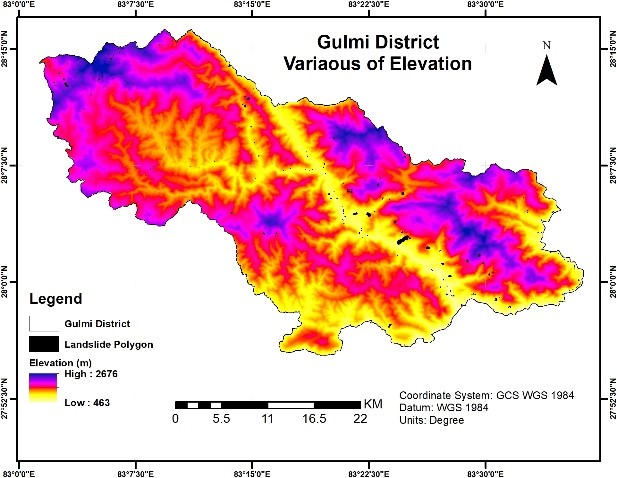
Landslide Susceptibility Assessment Using Bivariate Statistical Methods: A Case Study of Gulmi District, western Nepal

VW Engineering International, Volume: 3, Issue: 2, 29-40

Received: Oct. 20, 2021
Accepted: Nov. 18, 2021
Published online: Nov. 21, 2021

Pradeep Gyawali 1,3*, Yagya Murti Aryal 2, Amit Tiwari 3, Prajwol K. C. 3, Kutubuddin Ansari 4

1Survey Officer, Tulsipur Submetropolitan City, Dang, Nepal
2Central Department of Geology Tribhuvan University, Kritipur, Nepal
3Department Geomatics Engineering, Kathmandu University, Dhulikhel, Nepal
4Division of Mathematics, School of Advanced Sciences, Vellore Institute of Technology, Chennai, Tamil Nadu, India

*Corresponding Authors Email: pradeep2gyawali@gmail.com

Abstract: Landslides are one of the most recurrent natural hazards occurring each year in the hilly and mountainous regions of Nepal causing massive loss of life and property. Natural hazards such as landslides cannot be avoided completely but the processes and consequences can be mitigated. The main objective of the study was on the application of Geographic Information System (GIS), and statistical calculations for landslide susceptibility modeling of Gulmi District, western Nepal. The models were derived using two different statistical approaches including Frequency Ratio (FR) and Shannon Entropy (SE). A landslide inventory of the Gulmi district was developed. The landslide inventories were used to derive the quantitative relationships between landslide occurrences and landslide causative factors. In this study, ten landslide influencing factors were used which include slope, aspect, curvature, lithology, geology, land use land cover, distance from the river, distance from the road, and distance from fault and soil type. Individual factor maps were prepared as thematic layers. After determining the weights of each class from the proposed two models, the landslide susceptibility maps were ready with five classes (very low hazard, low hazard, moderate hazard, high hazard, and very high hazard) using GIS. The values of Area Under Curve (AUC) of success rate for FR and SE methods were found to be 81.8% and 80.6% respectively. The model shows that more than 15 % of the area falls under low and very low susceptibility levels while 44% of the area has a high probability of landslide occurrence. The result of the present study indicates that the integration of GIS has increased the quality and effectiveness of the overall process of susceptibility modeling and prediction mapping. To enhance the planning strategies for disaster mitigation and ensure sustainable development a reliable landslide hazard forecasting and risk assessment is a key component.

Keywords: Landslide; Gulmi District; Frequency Ratio (FR); Shannon Entropy (SE)

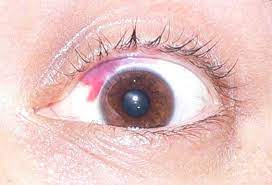
Clinical study of asymptomatic ocular conditions and symptoms in Delhi

0

VW Applied Sciences, Volume: 3, Issue: 2, 117-121

Received: Sep. 30, 2021
Accepted: Oct. 26, 2021
Published online: Oct. 28, 2021

Ayesha Sadqua 1*, Vibha Singh 1

1Department of Paramedical Sciences, Hamdard Institute of Medical Sciences and Research (HIMSR) and HAHC Hospital, New Delhi, Delhi 110062, India.

*Corresponding Authors Email: ayeshasiddiqui691@gmail.com

Abstract: It has been observed that many vision-threatening eyes diseases are asymptomatic. The trend of the eye examination is that when an individual perceives some obstacles in his vision, the main manifestations are blurred vision, decreased vision, diplopia, glare, bright halo, headache, eye fatigue, squinting, etc. Its characteristic is asthenopia. The quality of life is greatly affected by visual and ophthalmic conditions. The existence of some silent killer diseases which do not show any significant symptoms but considerably decrease the vision and in some cases if remain untreated will irreversibly damage the eye resulting in permanent loss of vision. Large-scale surveys in the U.S. have shown that only 11% of people are aware that diabetic retinopathy comes with no initial warning symptoms and as little as 8% for open-angle glaucoma. Consequently, this study aims to establish the prevalence of asymptomatic ocular conditions affecting individuals including younger and older patients (above 10 years of age), seeking for an eye exam solely based on refractive symptoms and also to categorize and establish the prevalence of each ocular condition diagnosed in the course of their eye examination.

Keywords: asymptomatic; ocular conditions; asthenopia; eye examination; Asymptomatic patients; Enfermedades de la retina; Ocular health screening; Ocular pathology; Pacientes asintomáticos; Patología ocular; Refracción; Refraction; Retinal diseases; Supervisión de la salud ocular.

Experimental study of mass flow rates of HTF on PCM based solar thermal energy storage

VW Engineering International, Volume: 3, Issue: 1, 23-28

Received: Aug. 31, 2021
Accepted: Oct. 10, 2021
Published online: Oct. 17, 2021

Imran Khan 1,2*, Mubashra Idris Khan 3

1Department of Hydro and Renewable Energy, Indian Institute of Technology, Roorkee-247667 (India)
2Scientist, DRDO, HQ Bhawan, New Delhi, India
3Government Polytechnic, Hindalpur, Hapur, UP, India
*Corresponding Authors Email: imrankhan@hqr.drdo.in

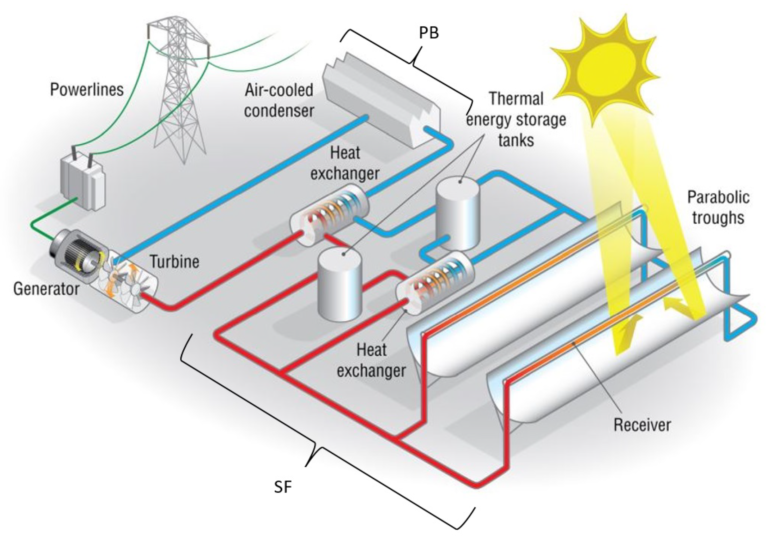
Abstract:  Intermittency in solar energy, in the case of thermal applications, it is necessary to store this energy in the form of thermal energy. It can be used when solar energy is unavailable and thus helps in minimizing the mismatch between energy demand and supply. However, it has poor heat transfer characteristics resulting in more charging and discharging times. To address this issue, various methodologies related to heat transfer enhancement have been suggested. Moreover, suitable working parameters for the best performance of this thermal storage system are also obtained. The results obtained under the present study revealed that additions of longitudinal fins improve the system efficiency significantly by reducing the charging and discharging times. Better performances were observed at a higher value of inlet temperature and mass flow rate of HTF. Moreover, suitable working parameters for the best performance of this thermal storage system are also obtained.

Keywords: solar, thermal energy storage, phase change material, PCM, heat transfer fluid, HTF

Advancements in numerical modeling of the continuous casting mold

VW Engineering International, Volume: 3, Issue: 1, 1-22

Received: June 23, 2021
Accepted: Aug. 10, 2021
Published online: Aug. 14, 2021

Md Irfanul Haque Siddiqui 1*, Ambrish Maurya 2, Rajneesh Kumar 3

1Department of Mechanical Engineering, King Saud University, Riyadh11421, Saudi Arabia
2Department of Mechanical Engineering, National Institute of Technology, Patna, India
3Department of Mechanical & Industrial Engineering, Indian Institute of Technology Roorkee, India
*Corresponding Authors Email: msiddiqui2.c@ksu.edu.sa

Abstract:  This paper presents a critical review of numerical modeling and methods applied in the continuous casting mold. With the recent advancement in metallurgical methods, the continuous casting process now becomes the main method for steel production. To achieve efficient and effective production, the manufacturers of steel keep on searching for new methods which increase productivity. The continuous casting process comprises many complicated phenomena in terms of fluid flow, heat transfer, and structural deformation. The important numerical modeling method of the continuous casting process has been discussed in reference in this work. The present work describes molten steel flow, heat transfer, solidification, electromagnetic applications, formation of the shell by solidification and coupling, etc. Further, the distortion of strand by thermo-mechanical forces, bulging, bending, and crack prediction has been discussed briefly. Numerical simulations have led to the path where greater information can be unleashed to understand the metallurgical process of strand solidification.

Keywords: steelmaking, mold, mathematical modeling, continuous casting, CFD