Home Blog Page 2

Studying the effect of partial replacement of coarse aggregates in PCC by waste tire rubber aggregates in the case of rigid pavements

VW Engineering International, Volume: 4, Issue: 3, 96-103

Received: Nov. 14, 2022
Accepted: Nov. 28, 2022
Published online: Nov. 30, 2022

Zaffer Salam Padder 1*, Vishal Yadav 1, Pooja Sharma 1

1Department of Civil Engineering, Desh Bhagat University, Mandi Gobindgarh, Punjab 147301, India.

Abstract:  In this research work, our emphasis is laid on the employment of rubber tire aggregates( 5% min & 15% max) by partially replacing the coarser rock aggregates in plain cement concrete in the case of rigid pavements. To get the maximum possible outcome it is very much advised to treat the rubber tire aggregate surface with NaOH and cement paste, before using them with M20 concrete mix. Using untreated rubber it was noticed that the overall compressive strength of the concrete mix had a rapid dip but when treated rubber was employed the overall 28-day compressive strength of the mix showed more than a 90% increase, which is quite satisfactory, considering the availability of used tire rubber at ease and cheap rates furthermore its employment reducing the amount of hazardous threat it can pose to the environment. Such an amount of compressive strength is accepted as quite satisfactory for treated rubberized tires, e.g. in the case of floor construction and concrete pavements where the compressive strength is not of so much importance. It was found that the flexural and split tensile strength is higher than the normal concrete but only when the rubber was treated with NaOH and cement paste. However, the workability had a certain dip, flexibility shows awesome increment, and the resultant mix is lighter than the concrete mix because of the light weight of rubber particles. Such enhancement in the properties like compressive strength, split and flexural strength, lightweight, high impact, toughness resistance, etc. can be helpful in the employment of this concrete in various civil engineering works.

Keywords:  OPC (ordinary Portland cement) UTR (untreated rubber), CTR (cement treated test)  NTR (NAOH treated rubber) workability Test, slump value, flexural test, tensile split strength test, compressive strength

Study of the performance of lime and flyash as soil subgrade stabilizing agents

VW Engineering International, Volume: 4, Issue: 3, 88-95

Received: Nov. 9, 2022
Accepted: Nov. 19, 2022
Published online: Nov. 26, 2022

Yameen Raja1*, Vishal Yadav2, Pooja Sharma 3

1Department of Civil Engineering, Desh Bhagat University, Mandi Gobindgarh Punjab 147301, India

Abstract: Inefficient soil characteristics are a major problem in engineering projects today. Sometimes the first stage in the building is to change the characteristics of inappropriate soil. Early signs of degradation in pavement structures on low soil subgrades include pavement that fails too soon. The potential for clayey soil to exhibit unfavorable engineering features, such as low bearing capacity, high shrinkage, swell characteristics, and high moisture susceptibility, is typically present. It is common practice to stabilize these soils to increase their strength. In order to enhance the engineering performance of soil, a technique called soil stabilization is used to add a binder to the soil. This study details how the addition of both lime and fly ash increased the cohesive soil’s strength in the surrounding area. Fly ash has been used to bind non-cohesive soil, granular soil, or soil that is poorly cohesive in place of the typical usage of lime alone in soil that contains clay and is highly cohesive. Fly ash is mostly utilized to support the base course or sub-base.

A comparative study on effect of bitumen emulsion, cement and lime on soil stabilization

VW Engineering International, Volume: 4, Issue: 3, 82-87

Received: Nov. 07, 2022
Accepted: Nov. 21, 2022
Published online: Nov. 26, 2022

Towfeeq Shams ud din 1*, Vishal Yadav 1, Pooja Sharma 1

1 Department of Civil Engineering, Desh Bhagat University, Mandi Gobindgarh, Punjab, India

Abstract: Soil is the basic foundation for any civil engineering structures and is one of nature’s most abundant construction materials for base. The most important part of a road pavement is subgrade soil and its strength. It is required to bear the loads without failure. If strength of soil is poor, then stabilization is normally needed. Subgrade is sometimes stabilized or replaced with stronger soil material so as to improve the strength.  Numerous methods are available in the literature for soil stabilization but sometimes, some of the methods like chemical stabilization, lime stabilization, cement stabilization, fly ash stabilization adversely affect the chemical composition of the soil. In this study bitumen emulsion, cement and lime were mixed with dredged soil to investigate the relative strength of gravel soil in terms of Unconfined Compression Test (UCC), Bearing Capacity and California Bearing Ratio (CBR). The effect of bitumen emulsion, Cement and Lime on the geotechnical characteristics of cement and lime mixtures was investigated by conducting various tests like CBR and UCC. A little cement added to provide better soil strength. It is observed that excellent soil strength results by using cationic bitumen emulsion (CMS) with little quantity of cement used as filler. The appropriate mixing conditions for gravelly soil with CMS Bitumen emulsion have been first attempted. This is followed by deciding four particular material conditions to show the variation in dry density and CBR value to achieve the best possible strength properties of gravel soil. However, in this study, without additives soil was tested to find the Optimum Moisture Content (OMC), CBR value, Plasticity Index and Unconfined Compression Strength.

Free Registration: Research Award 2022

0

The registration form will appear on the Desktop version of the website. No regsitartion fee is required.


India has 3275 scientists among the world’s top 2% of scientists: Stanford University Rankings 2022

0

The list of the top 2% most cited scientists in the world, just published by Stanford University, includes 3275 experts from India.

The scientists who obtain the most citations across all academic subjects are included in Stanford University’s annual list of the “World’s Top 2% Scientists,” published this week.

Download the list of 3275 scientists among the world’s top 2% of scientists.

NASA’s Webb Takes Star-Filled Portrait of Pillars of Creation

0

The iconic Pillars of Creation, where new stars are forming beneath dense clouds of gas and dust, have been imaged by NASA’s James Webb Space Telescope as a rich, extremely realistic environment. Although they are far more porous, the three-dimensional pillars resemble beautiful rock formations. The chilly interstellar gas and dust that make up these columns may seem semi-transparent in near-infrared light.

By identifying much more accurate counts of newly formed stars as well as the quantities of gas and dust in the region, Webb’s new view of the Pillars of Creation, which NASA’s Hubble Space Telescope first made famous when it imaged them in 1995, will aid researchers in revising their models of star formation. They will gradually get a better grasp of how stars grow in these dusty clouds over millions of years and then explode out of them.

This photo was taken by Webb’s Near-Infrared Camera and features newly created stars as the main attraction (NIRCam). These are the brilliant red orbs that are usually outside one of the dusty pillars and contain diffraction spikes. Within the pillars of gas and dust, knots that have amassed sufficient mass start to collapse under their own gravitational pull, slowly heat up, and finally give birth to new stars.

What about those wavy lines at the rims of certain pillars that resemble lava? These are star-forming stellar ejections from the surrounding gas and dust. Periodically, young stars emit supersonic jets that slam into dense pillar-like clouds of matter. In some cases, this also leads to bow shocks, which can create wavy patterns similar to what a boat makes when it travels across water. The vibrant hydrogen molecules produced by jets and shocks are what give off the color. The NIRCam picture almost pulses with their activity, as seen in the second and third pillars from the top. The age of these newborn stars is only thought to be a few hundred thousand years.

There are hardly any galaxies in this image, despite the impression that Webb has used near-infrared light to “punch through” the clouds and expose vast cosmic expanses beyond the pillars. Instead, the densest region of our Milky Way galaxy’s disk, which contains the interstellar medium, obscures our view of much of the deeper cosmos.

Hubble initially captured this view in 1995 and returned to it in 2014, but other observatories have also given this area their undivided attention. Each cutting-edge piece of equipment provides researchers with fresh information about this area, which is virtually bursting at the seams with stars.

The expansive Eagle Nebula, about 6,500 light-years away, is seen in this closely cropped photograph.

Women Claim Coronavirus Vaccines Impact Their Periods: New Study Confirms

0

A new study has shown that many of the complaints about the effects of coronavirus vaccines on periods were valid. Twenty-nine thousand people around the world were studied on a wide range of factors and compared with those who hadn’t been vaccinated. The results showed that people who received the vaccination experienced an average delay in getting their periods by 1 day compared with those who hadn’t been vaccinated.

The study published in the British Medical Journal Tuesday reports on data from a popular period-tracking app called Natural Cycles, which includes women from around the world. Most of the participants were from North America, Britain, and Europe; researchers analyzed 14,936 cycles among those who received the vaccine and 4686 cycles among those who did not. Because users tracked their menstrual cycles every month on the app—which included information about contraceptive use and other factors—researchers were able to analyze three menstrual cycles before vaccination and at least one cycle after. They compared these results with four cycles in unvaccinated participants.

A study led by Alison Edelman, a professor of obstetrics and gynecology at Oregon Health & Science University, found that women who received the HPV vaccine experienced an increase in the length of their menstrual cycle after the first dose. However, those who received two vaccinations within one menstrual cycle experienced greater disruptions. In this group, the average increase in cycle length was four days, and 13 percent experienced a delay of eight days or more; 5 percent in the control group did not experience any side effects.

Research has shown that vaccines can have a variety of effects on periods. A survey published last fall collected information from 160,000 people—including transgender and postmenopausal people—and found that thousands reported heavier bleeding than usual or breakthrough bleeding.

The study did not address all of the questions raised by people about vaccines and periods, including how the shots affect trans men and nonbinary individuals. Since the vaccines were rolled out, many people on social media have complained of longer, heavier and more-painful periods after getting vaccinated. However, this study did show that, on average, getting vaccinated does not appear to cause longer periods.

Stanford University Rankings 2022: World’s top 2% scientists list

0

This week, Stanford University, one of the top research and educational institutions in the world, released its yearly list of the “World’s Top 2% Scientists,” which includes the researchers who receive the most citations across all academic fields.

Top 2% of scientists in 2021 (LIST RELEASED IN 2022)

You can download the list of the top 2% of scientists in the world from the following links:

The list of the top 2% most cited scientists in the world, just published by Stanford University, includes 2,273 scientists from India. However, China, which has 7,795 scientists on the list, much outnumbers this figure, which is based on lifetime citations. In the list of scientists referenced in 2021, the difference is much greater: India has 3,796, which is less than a sixth of China’s 19,459.

India performed badly as compared to China and even lagged behind Brazil and South Africa in several topics, although outperforming the other BRICS (Brazil, Russia, India, China, and South Africa) countries overall.

A total of 21 researchers and faculty members from the Indian Institute of Technology Guwahati, including Professor TG Sitharam, Director of the Institute, have been featured among the world’s Top 2 percent Scientists List created by Stanford University, US.

Professor T G Sitharam, Director, along with 20 other faculty members have been ranked for their research publications citations using all Scopus author profiles as of September 1, 2022, and their lifetime contribution to their specific fields of research in the list.

Scientists are classified into 22 scientific fields and 176 sub-fields. The selection is based on the top 100,000 scientists by c-score (with and without self-citations) or a percentile rank of 2 percent or above in the sub-field. As many as 195,605 scientists are included in the career-long database and 200,409 scientists are included in the single recent year dataset. This version (4) is based on the 1st September 2022 snapshot from Scopus, updated to the end of the citation year 2021.

The IIT Guwahati faculty members featured in the Stanford University list
are from various scientific fields, including the Departments of Civil
Engineering, Mechanical Engineering, Physics, Chemical Engineering, Biosciences
and Bioengineering, Chemistry, Electrical, and Electronics.

1. Professor T.G. Sitharam, Director, IIT Guwahati

2. Professor Vijay S. Moholkar, Department of Chemical Engineering

3. Professor. K. Giri, Department of Physics and Center for Nanotechnology

4.ProfessorMihir Kumar Pulkit, Department of Chemical Engineering

5. Professor Tharmalingam Punniyamurthy, Department of Chemistry

6. Professor M. Groll, Visiting Professor

7. Professor Biman B. Mandal, Department of Biosciences and Bioengineering,

8. Professor Kaustubha Mohanty, Department of Chemical Engineering

9. Professor Somanath Majhi, Department of Electrical and Electronics
Engineering

10. Professor Amarendra K. Sarma, Department of Physics

11. Professor Jubaraj Bikash Baruah, Department of Chemistry

12. Professor Rakhesh Singh Kshetrimayum, Department of Electrical and
Electronics Engineering

13. Professor Rajiv Tiwari, Department of Mechanical Engineering

14. Professor Debabrata Chakraborty, Department of Mechanical Engineering

15. Professor Vaibhav V. Goud, Department of Chemical Engineering

16. Prof. Ujjwal K. Saha, Department of Mechanical Engineering

17. Professor P. Muthukumar, Department of Mechanical Engineering

18. Dr. Lalit M. Pandey, Associate Professor, Department of Biosciences and
Bioengineering

19. Dr. Sanjib Ganguly, Associate Professor, Department of Electrical and
Electronics Engineering

20. Dr. Bibhas Ranjan Majhi, Associate Professor at the Department of
Physics

21. Dr. Ajaikumar B. Kunnumakkara, Associate Professor, Department of
Biosciences and Bioengineering

A review of modern sustainable transit systems in urban areas

VW Engineering International, Volume: 4, Issue:3, 72-81

Received: Sep. 05, 2022
Accepted: Oct. 10, 2022
Published online: Oct 13, 2022

Mohida Manzoor 1, * Manish Goel 1, and Pooja Sharma 1

1 Department of Civil Engineering, Desh Bhagat University, Mandi Gobindgarh, Punjab, India

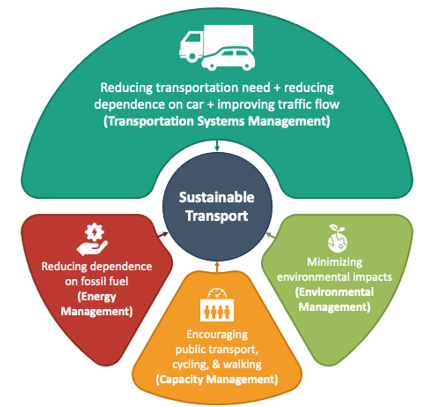
Abstract: Due to air pollution and traffic congestion brought on by the fast development in urban travel demand, there is an increasing need for alternate means of transportation in metropolitan areas. By reducing the negative effects of network congestion, a transit system may significantly contribute to improving the sustainability of transportation in these places. A substantial fraction of customers may be persuaded to leave their own vehicles at home and take public transportation instead if the service quality was comparable to that of the automotive mode. By reducing the number of circulating cars and raising the average speed of traffic flow, a competitive transit system can increase user mobility and lower emissions from circulating vehicles. However, the amount of network travel demand that a transportation system captures primarily relies on the level of user service it provides. As a result, it’s critical to balance operating costs with service quality by reducing the social, economic, and environmental costs associated with putting in place an effective and sustainable transportation system design.

Keywords: Sustainable transit system; Direct route design; Electric buses; Emissions; Public transport; Sustainability; Transit network design; Urban Transit networks

CRISPR-Cas9 Mediated Gene Editing As Therapeutic Tool In Neurodegenerative Disorders

VW Applied Sciences, Volume: 4, Issue: 2, 146-153

Received: May 21, 2022
Accepted: July 06, 2022
Published online: July 09, 2022

Raafiah Izhar 1*, Gufran Ali 2

1Department of Biosciences, Jamia Millia Islamia, New Delhi, India.
2Department of Pharmacology, J.N. Medical College & Hospital, A.M.U., Aligarh, U.P., India

Abstract:  The gene targeting methods like CRISPR/Cas9, is one of the most powerful technologies for correcting inconsistent genetic signatures and are widely used against various types of diseases these days. CRISPR/Cas9-based strategies have the potential to treat complex diseases as it is a relatively straightforward, inexpensive, and precise system. This review article summarizes the applications of CRISPR/Cas9 genetic engineering in neurodegenerative disease models, providing therapeutic gene editing perspectives for neurological diseases. Here, understanding of CRISPR/Cas9 mediated genome editing in neurological diseases such as Alzheimer’s, Parkinson’s, and Huntington’s disease has been focused on targeting specific genes involved and its potential as the most promising and emerging technologies taking into account the low off-target effects of CRISPR/Cas9 and its highest editing efficiency.

Keywords: CRISPR/Cas9, Neurodegenerative disorder, Gene therapy