
Home Blog Page 4

Effect of inlet temperature of HTF on PCM based solar thermal energy storage

0

VW Applied Sciences, Volume: 3, Issue: 1, 110-116

Received: July 01, 2021
Accepted: July 29, 2021
Published online: Aug. 02, 2021

Imran Khan 1,2*, Mubashra Idris Khan 3

1Department of Hydro and Renewable Energy, Indian Institute of Technology, Roorkee-247667 (India)
2Scientist, DRDO, HQ Bhawan, New Delhi, India
3Government Polytechnic, Hindalpur, Hapur, UP, India
*Corresponding Authors Email: imrankhan@hqr.drdo.in

Abstract:  Nowadays, research is conducted to focus on developing efficient and cost-effective energy storage systems. Sensible and latent heat thermal storage systems are the most widely used energy storage technologies. Latent thermal storage is more advantageous than sensible thermal storage as it has higher energy storage density with isothermal charging and discharging process. However, it has poor heat transfer characteristics resulting in more charging and discharging times. To address this issue, various methodologies related to heat transfer enhancement have been suggested. The main objective of this work is to enhance the heat transfer of the thermal storage system by the inclusion of longitudinal fin configuration. The thermal storage system considered is vertical shell and tube type, where paraffin wax is used as phase change material (PCM), and water is used as heat transfer fluid (HTF). The performance of a shell and tube type latent storage system with and without fins has been experimentally investigated under different operating conditions. The operating parameters are considered as the inlet temperature of HTF. The results obtained under the present study revealed that additions of longitudinal fins improve the system efficiency significantly by reducing the charging and discharging times.

Keywords: solar, thermal energy storage, phase change material, PCM, heat transfer fluid, HTF

Study of River Channel Migration and Identification of Potential Sugarcane Cultivation Area: A Case Study on Tulsipur Sub-Metropolitan City

0

VW Applied Sciences, Volume: 3, Issue: 1, 104-109

Received: June 15, 2021
Accepted: July 20, 2021
Published online: July 29, 2021

Prajwol KC 1, Amit Tiwari 1, Ashish Dutta 1, Pradeep Gywali2*, Kutubuddin Ansari3

1 Department of Geomatics Engineering, Kathmandu University, Dhulikhel, Nepal
2Survey Officer, Tulsipur Submetropolitan city, Dang, Nepal
3Integrated Geoinformation (IntGeo) Solution Private Limited, New Delhi, 110025, India
*Corresponding author: pradeep2gywali@gmail.com

Abstract:  River channel migration involves the lateral migration of an alluvial river channel across its floodplain which is mainly driven either by bank erosion or point bar deposition over time. It is the study of major rivers of Tulipa Sub-Metropolitan City using remote sensing images over the span of 11 years (2010-2020). The river channel migration directly affects land use, and it has also a direct effect on the settlements lying on the plain area near the riverside. Cultivating sugarcane in the sand area is one of the mitigating measures to control floods and prevent erosion of banks. This paper presents an enhanced change detection method of river channel migration using remote sensing images and identification of sand areas using classification and interpretation techniques.

Keywords: GIS, LULC, UTM, Supervised Classification, LANDSAT, River Channel Migration,

Mathematical modeling of continuous casting tundish: A Review

0

VW Applied Sciences, Volume: 3, Issue: 1, 92-103

Received: May 28, 2021
Accepted: July 15, 2021
Published online: July 19, 2021

Md Irfanul Haque Siddiqui 1*, Ambrish Maurya 2, Fisal Asiri 3, Rajneesh Kumar 4

1Department of Mechanical Engineering, King Saud University, Riyadh11421, Saudi Arabia
2Department of Mechanical Engineering, National Institute of Technology, Patna, India
3Department of Mathematics, Taibah University, Madinah, Saudi Arabia
4Department of Mechanical & Industrial Engineering, Indian Institute of Technology Roorkee, India
*Corresponding Authors Email: msiddiqui2.c@ksu.edu.sa

Abstract: Continuous casting process is an important process to produce steel. Nowadays, steelmakers are focusing on improving process capabilities, efficiency, and product performance in terms of mechanical properties. Hence, various ways have been devoted by researchers globally to improve the continuous casting process and final product quality. Mathematical modeling of steelmaking tundish is an important aspect to enhance the process capability of continuous casting system especially in improving the steelmaking tundish performance. In the present work, we have reviewed the recent progress made in the mathematical modeling of steelmaking tundish. Since tundish is an important last metallurgical reactor, vast importance has been given to modifying and enhancing tundish performance to increase mechanical properties by reducing impurities. We have reviewed the most important aspects of mathematical modeling such as melt flow, heat transfer, turbulence modeling, grade mixing, and refractory wall study, etc. This review work would be helpful t understand the basic mathematical modeling practice of steelmaking tundish.

Keywords: steelmaking, tundish, mathematical modeling, continuous casting, CFD

Impedance Measurement System for Bio-Impedance Spectroscopy Using Under Sampling

VW Engineering International, Volume: 1, Issue: 1, 04-11 (2019)

Received: March 30, 2019
Accepted: Sept. 28, 2019
Published online: Oct. 04, 2019

Muhammad Waqas1
Syed Wahajul Haq2
Shahzad Ahmed3

1Department of Computer, Technische Universitat, Chemnitz, Germany
2Department of Electrical Engineering, Air University, Islamabad, Pakistan
3Department of Electronics and Computer Engineering, Hanyang University, Seoul, South Korea
*Corresponding author: mwaqaschaudery@gmail.com

Abstract: In embedded systems, Impedance spectroscopy is used to measure the impedance of the system as a function of frequency. The standard U-1 method for designing impedance analyzer includes use of Gain-Phase Detector (GPO), Peak Detector, Discrete Fourier T ransform (OFT). T his project aims at designing of a microcontroller based impedance measurement system using OFT and Under Sampling to enhance the frequency range in portable bio-impedance measmement systems. The impedance analyzer implements a digital concept with appropriate signal conditioning for voltage and current measurement, early signal digitization and subsequent digital signal processing in order to calculate the components of impedance. The designed impedance analyzer measures the impedance magnitude and phase at frequencies up to l O MHz at low frequencies, the module utilizes the conventional direct conversion method, whereas at high frequendes the under sampling technique is used. The results from the impedance analyzer for commonly used tissue model (Device Under Test) are validated by comparing it with the theoretical results from matlab. The results show a good performance to frequencies up to 3 MHz Above 3 MHz systematic deviations are becoming visible. The system was observed for impedance magnitude and phase out of 10 measurements and shows standard deviation of 0.2 rr (0.2%) for impedance magnitude and a standard deviation of 0.5° for impedance phase.

Towards Decoupling Computation in BSP Communication

VW Electronics and Information Technology, Volume: 1, Issue: 1, 04-11 (2019)

Received: Sept. 01, 2019
Accepted: Sept. 21, 2019
Published online: Sept. 23, 2019

Ibad ur Rahman1
Yaseen Muahmmad2
Shahzad Ahmed3
Muhammad Hanif 4*

1Militry College of Signals, NUST, Pakistan. ibaduet@gmail.com
2Univeristy of Engineering and Technology, Peshawar, Pakistan. yaseen@live.com
3Department of Electronics and Computer Engineering, Hanyang University, Seoul, South Korea shahzad1@hanyang.ac.kr
4Division of Computer Science and Engineering, Hanyang University, Seoul, South Korea

All authors contributed equally to this work
*Corresponding author email: honeykhan@hanyang.ac.kr

Abstract: In recent times, the Bulk Synchronous parallel (BSP) model, which splits the underlying running programs into multiple super-steps, has gain popularity in distributed graph processing systems. However, high number of message and data exchange in each super-step will create a long epoch of time, often called as network overhead or communication delays. In this paper, we add an additional step in the synchronization phase through decoupling the synchronization in to local and global synchronization. This approach move some of the data and messages exchange over the network to locally optimized pointers for the next super-step. We prototyped the proposed system and the preliminary evaluation shows decoupled mechanism outperforms baseline system on the average. The system help eliminate the unnecessary communication between the instances and localize some of the DAG nodes for the next super-step.

Next-Generation Networks based implementation of eFax Services

VW Electronics and Information Technology, Volume: 1, Issue: 1, 01-04 (2019)

Received: Sept. 01, 2019
Accepted: Sept. 12, 2019
Published online: Sept. 14, 2019

Usman Ali Khan1*
Hammad Ahmed Shah2

1,2 National University of Computer and Emerging Sciences, Islamabad, Pakistan.
*Corresponding author email: usmanali20000@gmail.com

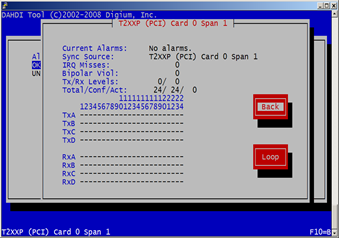
Abstract: The aim of electronic Fax (eFax) services is to allow sending and receiving of faxes through the internet. Our implementation involves development of a Fax server which when included in the IP (Internet Protocol) cloud can help Next Generation Networks (NGN) provide eFax services to its customers. We have implemented a HylaFAX enterprise server which is a telecommunication system for the UNIX environment supporting conversion of fax calls from fax machines to TIFF/PDF format and vice versa. The HylaFAX server is connected to an Asterisk PBX via an IAX channel. Its online interface is through AVANTfax which is a GUI for our server. The server communicates with Group 3 fax machines running T.30 and T.4 along with V.XX modulation schemes connected through Asterisk. It can also connect devices which work on the ITU-T recommendation of real-time FoIP T.38. The complete solution allows users to send/receive faxes to/from other fax numbers through an open source online interface AVANTfax. The solution presented has the capability to integrate with Next Generation Network.

Impacts of Illegal and Expedient Development on Built Environment

VW Engineering international, Volume: 1, Issue: 1, 12-17 (2019)

Received: Sept. 02, 2019
Accepted: Sept. 24, 2019
Published online: Sept. 25, 2019

Sorath Abbasi 1,2
Zulfiqar Ali Lashari 1,2
M.Y. Mangi 1

1Department of City and Regional Planning, Mehran University of Engineering and Technology, Jamshoro, Sindh, Pakistan.

2Graduate School of Urban Studies, Hanyang University Seoul, South Korea.
Corresponding Author E-mail: sorath16@hanyang.ac.kr

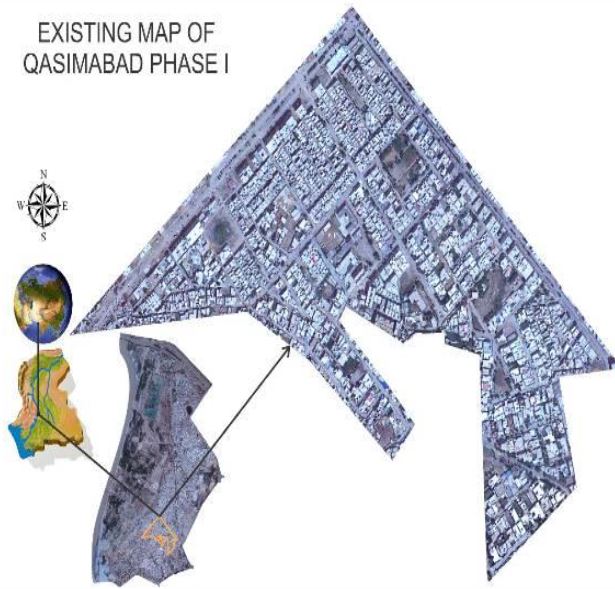
Abstract: Cities are central to the process of socio-economic growth and innovation. However, when these cities undergo through an unplanned urbanization process, they often molded themselves into numerous urban problems. Once these urban areas are expanding beyond their periphery limits, significant changes in the land-use regulation and violation of the bylaws occur. This may dramatically affect the built environment. Thus, this research is an attempt is to highlight the trends of unplanned urban development and quantify their impacts on the built environment of Qasimabad town in Pakistan. An informal approach of land-use assessment was used to determine changes and its impacts from the years 1988–2013. The study has used a wide range of substantive examples and targeted cases studies, which were helpful to identify urban land-use change and suggested a possible strategy to resolve them. The results illustrated that land-use changes were mainly driven by anthropogenic activities. Results also shows the major cause of land-use change was lack of law and enforcement and proper policies to leverage long-term consequences. Policy implications can be drawn from this research for the future development that should be based on the functionality of local environment and social aspects of urban areas.

Implementation of DQPSK based Transmitter on the digital signal processor

VW Engineering International, Volume: 1, Issue: 1, 04-11

Received: Sept. 01, 2019
Accepted: Sept. 21, 2019
Published online: Sept. 23, 2019

Shahzad Ahmed1
Syed Wahaj ul Haq2
Tehseen Sattar2
Waseem Khan2*

1Department of electronics and computer engineering, Hanyang University, Seoul, South Korea. shahzad1@hanyang.ac.kr
2Department of electrical engineering, Air University, Islamabad, Pakistan
Syed.wahaj@outlook.com, waseem.khan@mail.au.edu.pk
*Corresponding author email: waseem.khan@mail.au.edu.pk

Abstract: In recent times, the implementation of digital systems on short-scale embedded platforms is gaining the interest of the research community. However, the absence of an implementation strategy is turning out to be a bottleneck. This paper presents a methodology for the digital signal processor (DSP) based implementation of the communication system with Differential Quadrature Phase Shift Keying (D-QPSK) as the band-pass modulation scheme. Most of the functional blocks of the standard transmitters are implemented including signal encoding, baseband pulse shaping, and modulation. The symbols are transmitted over a wired channel in the presence of noise. For encoding the input data, Non-return-to-zero encoding scheme is implemented and for pulse shaping, raised cosine pulse shape is implemented. An optimized strategy to implement basic blocks of communication systems using embedded hardware is also presented. The transmitter is finally implemented on a commercial Digital Signal Processor (DSP). Results have shown that the DQPSK based transmitter can be implemented on short-scale platforms such as DSP systems.

Effect of Surface Roughness on Shear Strength of Bonded Joints of Aluminum AL 6061 T6 substrate

0

VW Applied Sciences, Volume: 2, Issue: 2, 87-91

Received: April 18, 2020
Accepted: May 02, 2020
Published online: May 13, 2020

Jawad Abid1, Hassan Raza2*, Awais Akhtar2, Ghulam Abbas Gohar1, Sana Ullah2, Muhammad Akram1, Yasir Raza1, Muhammad Dawood Bukhari1

1Department of Mechanical Engineering, COMSATS University Islamabad, Sahiwal Campus, Pakistan
2Department of Mechanical Engineering, The Hong Kong Polytechnic University, Hong Kong
*Corresponding Authors Email: hassan.raza@connect.polyu.hk, Tel: +85255190485

Abstract: In this study, the effect of surface roughness on adhesive bonding of aluminum (AL 6061 T6) substrates is investigated to determine the required bond strength between the adhesive and adherends interface. Quality of AL 6061 T6 lap shear joints (adherend surface preparation) is achieved by mechanical abrasion using diverse grades of silicon carbide sheets (P 320C, P 220C, and P 180C). Lab grade acetone is utilized for the removal of impurities from the substrate surface while Loctite 4090 is served as adhesive to bond lap shear joints. The surface roughness of the substrates is measured by using a profilometer (SURFTEST SJ-210). Experimental testing of adhesively bonded specimens with diverse surface roughness is conducted on Universal Testing Machine (UTM) to measure the shear strength. The results show that aluminum adherends pretreated with P220 C achieve maximum adhesion bond strength up to 34.45 MPa at surface roughness of Ra=1.55 μm, but further increase in surface roughness from Ra=1.55 μm to Ra=2.4 μm causes 13.7% decrease in shear bond strength. Furthermore, the specimens without pretreatment achieve minimum shear bond strength up to15.23 MPa at surface roughness of Ra=0.03 μm. It was concluded that with the increase in surface roughness of the adherends up to a certain limit, bond strength also increases, and locus of failure shifted from adhesive – adherend interface to within the adhesive.

Adhesion Theories and Effect of Surface Roughness on Energy Estimation and Wettability of Polymeric CompositesBonded Joints: A-Review

0

VW Applied Sciences, Volume: 2, Issue: 1, 74-86

Received: April 04, 2020
Accepted: April 07, 2020
Published online: April 10, 2020

Muhammad Dawood Bukhari1, Ghulam Abbas Gohar1, Awais Akhtar2, Sana Ullah2, Muhammad Akram1, Jawad Abid1, Hassan Raza2*

1Department of Mechanical Engineering, COMSATS University Islamabad, Sahiwal Campus, Pakistan
2Department of Mechanical Engineering, The Hong Kong Polytechnic University, Hong Kong
*Corresponding Authors Email: hassan.raza@connect.polyu.hk, Tel: +85255190485

Abstract: Adhesive bonding is getting more attention for research and considered as most promising and well-known technique for joining the two materials which may be similar or dissimilar naturally polymers, metals, etc., and to be utilized in light weight structures for reduced stress distribution. Adhesion bonding consisting on intrinsic bonding force which plays vital role to make the joint withstand more strength. To fabricate an effective griped joint between the components, good adhesion strength is compulsory attainment factor for long life of structures. Recently, along with metallic materials polymers and their composites are also trending in multiple industries. All materials always have forces of attraction between their atoms/molecules which extremely crucial role to ensure stronger bond strength and often dependent on roughness of surface of material which are taking part to fabricate the joint. Consequently, surface roughness and surface morphology are most important parameters to decide the joint strength and life of bonded joints of polymeric composites. In this review article, mechanical interlocking mechanism, surface roughness effects on wettability, surface energy estimation and various bonding theories including adsorption theory, diffusion theory, boundary layer theory and chemical theory are discussed briefly to emphasize the various technological & industrial developments